Scaling EFB research across 200+ airlines
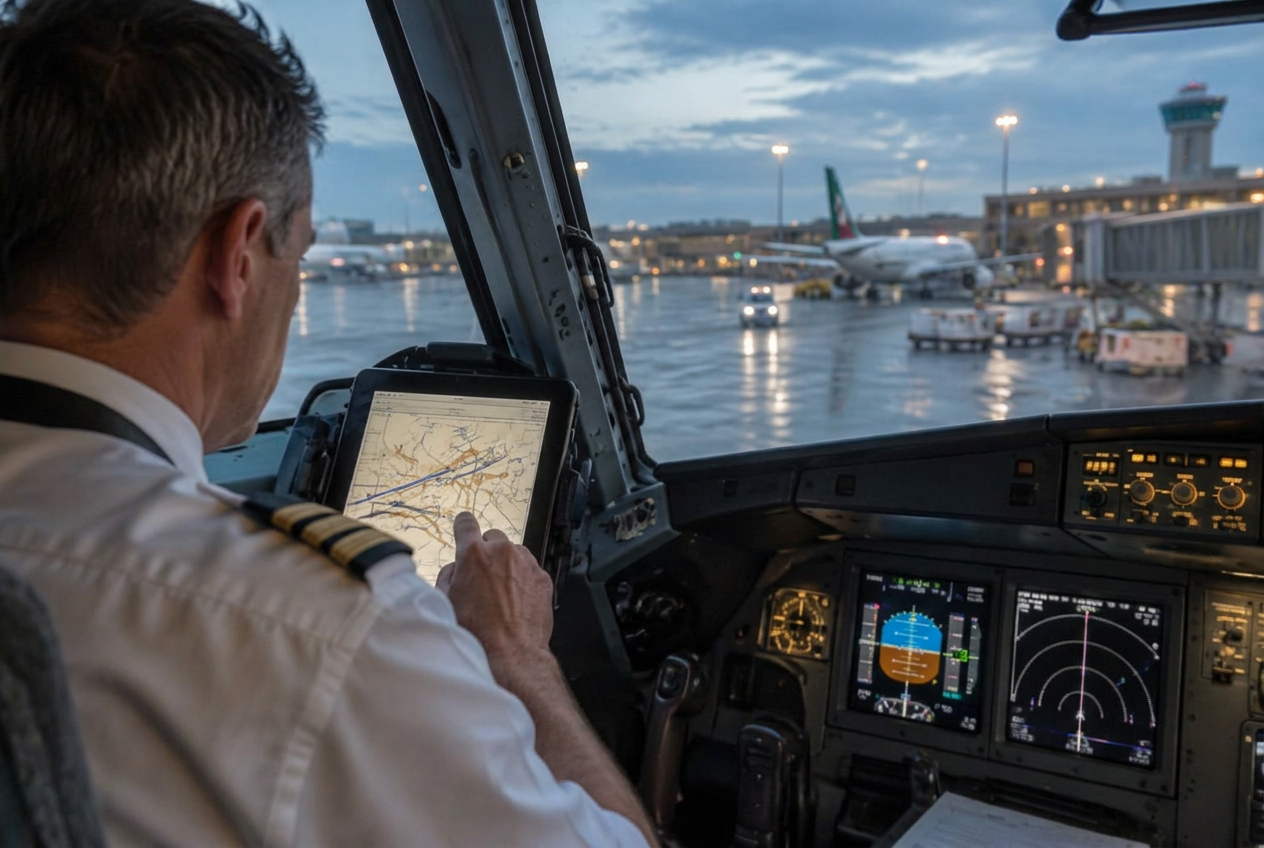
Reduced pilot heads-down time by 30%.
Context
ForeFlight, a Boeing company at the time of the engagement, developing Jeppesen's FliteDeck ProX Electronic Flight Bag for commercial airlines. The integrated platform consolidated flight planning, charts, weather, and hazard awareness into a single safety-critical tool. ForeFlight now operates as Jeppesen ForeFlight.
Challenge
Validate that line pilots could safely and efficiently use the EFB in high-workload operational contexts while maintaining situational awareness and reducing heads-down time on the device.
How we helped
Conducted high-fidelity Line-Oriented Flight Training (LOFT) simulation testing using real routes, diversions, and geographic edge cases. Moderated usability sessions used think-aloud, the System Usability Scale (SUS), and NASA TLX workload assessment, alongside A/B testing, cognitive walkthroughs, and FAA/EASA heuristic evaluations. Led a gap analysis across 200+ airline operators globally to prioritize the product roadmap.
The impact
- •Identified 25+ critical use errors in flight planning and navigation workflows
- •Validated feature adoption across 200+ airlines globally
- •Reduced pilot heads-down time by 30% compared to legacy multi-app workflows
- •Supported successful deployment to commercial airline fleet
- •Cross-regional gap analysis across three continents directly informed feature prioritization
- •Simulator evaluation surfaced haptic interaction degradation under turbulence, crew coordination gaps, and persistent trust erosion after system errors
- •Findings shaped trust-signal requirements for digital sync features and confirmed the need for manual override on Auto SID/STAR
Methods
- Usability Testing
- Interviews
- LOFT Simulation Testing
- Think-Aloud Protocol
- A/B Testing
- Cognitive Walkthroughs
- FAA/EASA Heuristic Evaluation
- Cognitive Task Analysis
- Global Gap Analysis
Tools
- System Usability Scale (SUS)
- NASA TLX
Standards & research foundations
- FAA/EASA Usability Guidelines
- Pilot Workload
- Situational Awareness
- Crew Resource Management
- Haptic Interaction
- Trust Calibration