
Illustrative research session evaluating a medical device prototype

Better decisions.
By design.

A focused engagement or ongoing human factors leadership. The right fit for the decision ahead.

Our Approach

A defined question

Project-based

Who it’s for
Teams with a specific design decision, research question, or validation milestone.
Typical scope
A fixed-scope package, a complete study, or selected individual services with agreed deliverables.
Timeline
Two weeks for a discovery sprint. Other engagements are scheduled around scope, recruitment, and design readiness.
Examples
Discovery Sprint · UI Safety Review · Formative Evaluation · Summative Validation Support
Project-based work
Across the program

Embedded

Who it’s for
Teams needing ongoing human factors leadership without a full-time hire.
Typical scope
A fractional HF lead or retainer, owning the usability engineering file and advising the team across the program.
Timeline
Ongoing support with cadence and allocation agreed against program milestones.
Examples
Usability engineering ownership · Study planning · Use-risk and design advice · Team support
Embedded work

Project-based.
Focused scope. Clear outputs.

Four packages with research activities and deliverables agreed before kickoff.

Discovery Sprint

Scope
A bounded workflow or product question, with users and research activities agreed before kickoff.
Timeline
Two weeks

Included services

  • User Interviews
  • Contextual Inquiry
  • Workflow & Journey Mapping
  • Task & Cognitive Task Analysis

Deliverables

  • User needs and workflow map
  • Critical decisions and research gaps
  • Prioritized next steps

UI Safety Review

Scope
An agreed interface, its critical tasks, and available design and risk documentation.
Timeline
Agreed after interface and risk review

Included services

  • Heuristic Evaluation
  • Cognitive Walkthroughs
  • Use-Related Risk Assessment

Deliverables

  • Prioritized usability and use-risk observations
  • Critical-task and interface recommendations
  • Review findings and design priorities

Formative Evaluation

Scope
A defined prototype or device, representative user groups, and agreed tasks and study conditions.
Timeline
Agreed around recruitment and prototype readiness

Included services

  • Usability Testing
  • Formative Studies
  • Simulation & Workload Evaluation

Deliverables

  • Study protocol and observed task findings
  • Use errors, root causes, and design recommendations
  • Priorities for refinement and retesting

Summative Validation Support

Scope
An agreed MedTech validation milestone, final design, critical tasks, user groups, and applicable pathway.
Timeline
Agreed around design readiness and recruitment

Included services

  • Task & Cognitive Task Analysis
  • Use-Related Risk Assessment
  • Summative / Validation Testing

Deliverables

  • Validation protocol and critical-task coverage
  • Residual use-risk analysis
  • HFE/UE reporting for the applicable submission

Find the needs, decisions, and handoffs that should shape the design.

Evaluate interfaces and prototypes while the design can still change.

For regulated MedTech, evaluate critical tasks and document use-related risks. In other systems, build evidence for operational readiness.

Make information easier to find and connect the experience to the work behind it.

Strategy & advisory

Research strategy

Before testing the wrong thing, define the real question, the evidence that answers it, and the roadmap to get there.

Product & workflow strategy

Turn research findings into a ranked set of what to fix first, in the interface and the workflow around it.

AI-Native Solutions

Decide where AI adds value, where people need control, and how to test the experience.

Build the team’s judgment.

Focused workshops. Real workflows. Better research decisions.

Clinicians reviewing electronic health record workflows at a care station

Workflow-Gap Diagnosis

Find what’s getting in the way. Separate design, process, and skill gaps, then prioritize the right intervention.

HFE practitioners working through a usability session during a workshop

Workshop Facilitation for MedTech/HFE

Practice with your device and critical tasks. Sharpen study protocols, neutral probing, and use-error documentation.

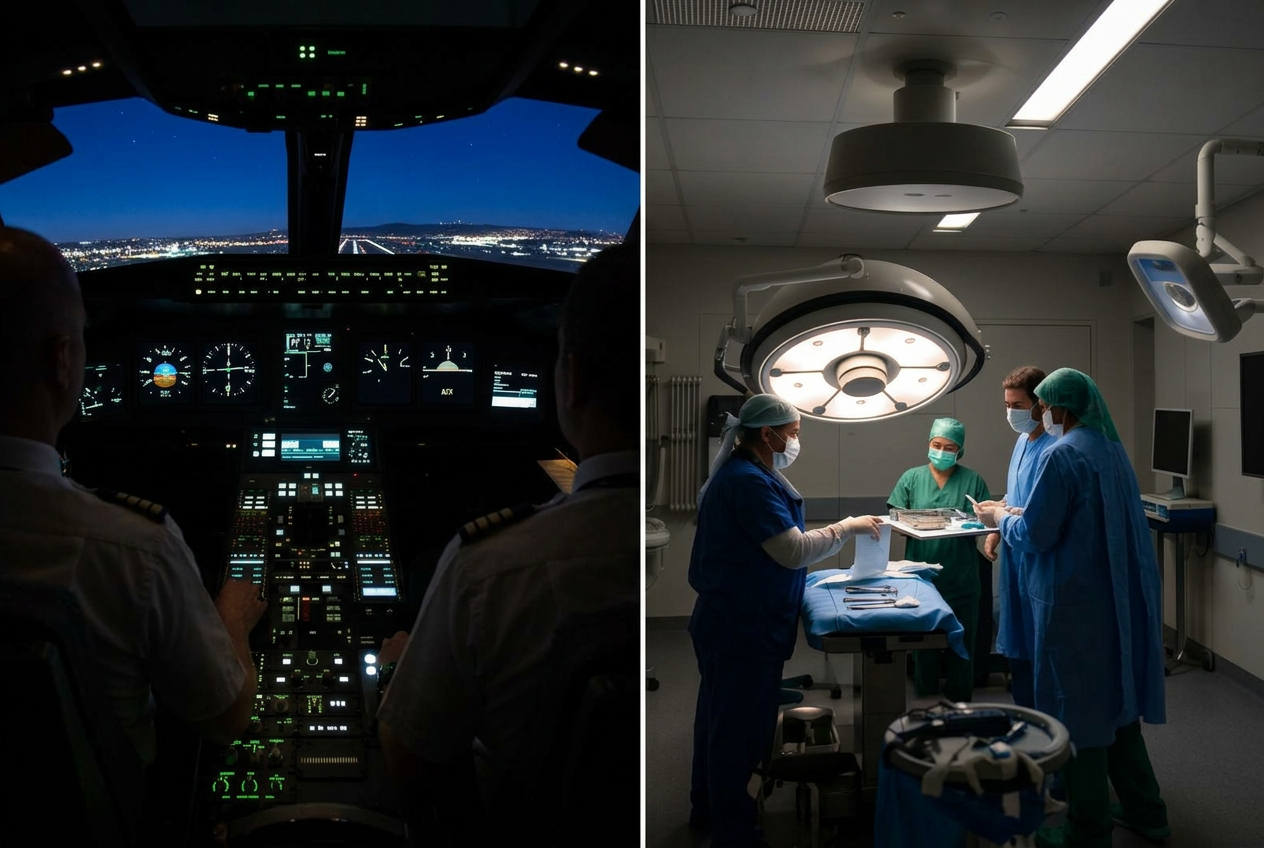
Cockpit and surgical console cues merged in a cross-domain safety-critical setting

From the Flight Deck to the OR: Cross-Domain Safety-Critical HFE

Bring aviation’s human factors perspective to MedTech. Examine situational awareness, critical decisions, and failure recovery across domains.

Scope
A facilitated session around your team’s workflow, device, or research question.
Timeline
Session length and preparation agreed before kickoff.
Deliverables
Documented decisions, research priorities, and practical next steps.
Fractional HF lead · Retainer

Embedded.
Ownership across the program.

We work alongside your product, design, and engineering team, keeping human factors decisions connected from early development through validation and implementation.

The cadence, decision responsibilities, and program milestones are agreed together. You retain your team and product ownership; we take responsibility for the human factors workstream.

What we own

  • Own and maintain the usability engineering file
  • Plan formative and summative studies across the program
  • Coordinate research priorities with product, design, and engineering
  • Advise on use-risk controls, design decisions, and evidence gaps
  • Support documentation, implementation handoffs, and team judgment

Not sure which fits?

Start a conversation